
Market Value
See what your stock is worth, not just what it is.
Purchase cost, selling price, and market-value context for every lot. Valuation visibility for wine programme operators and serious collectors who want to understand the portfolio, not just the count.
The gap today
- Inventory counts tell you how many bottles exist but not what they are worth.
- Cost basis is buried in purchase invoices, not attached to the lot record.
- Slow-moving stock accumulates without visibility into its market position.
- Collectors and operators lack a clear answer to what the programme is worth today.
- Buying decisions are reactive because there is no view of gaps or concentration.
What changes with Vinius
- Purchase cost, selling price, and market reference sit in the same lot record.
- Valuation aggregates across lots, categories, regions, and storage locations.
- Depletion velocity shows which wines are moving and which are sitting.
- Concentration and gap analysis inform buying decisions before they become problems.
- Valuation updates as lots are acquired, sold, or adjusted, without a separate appraisal.
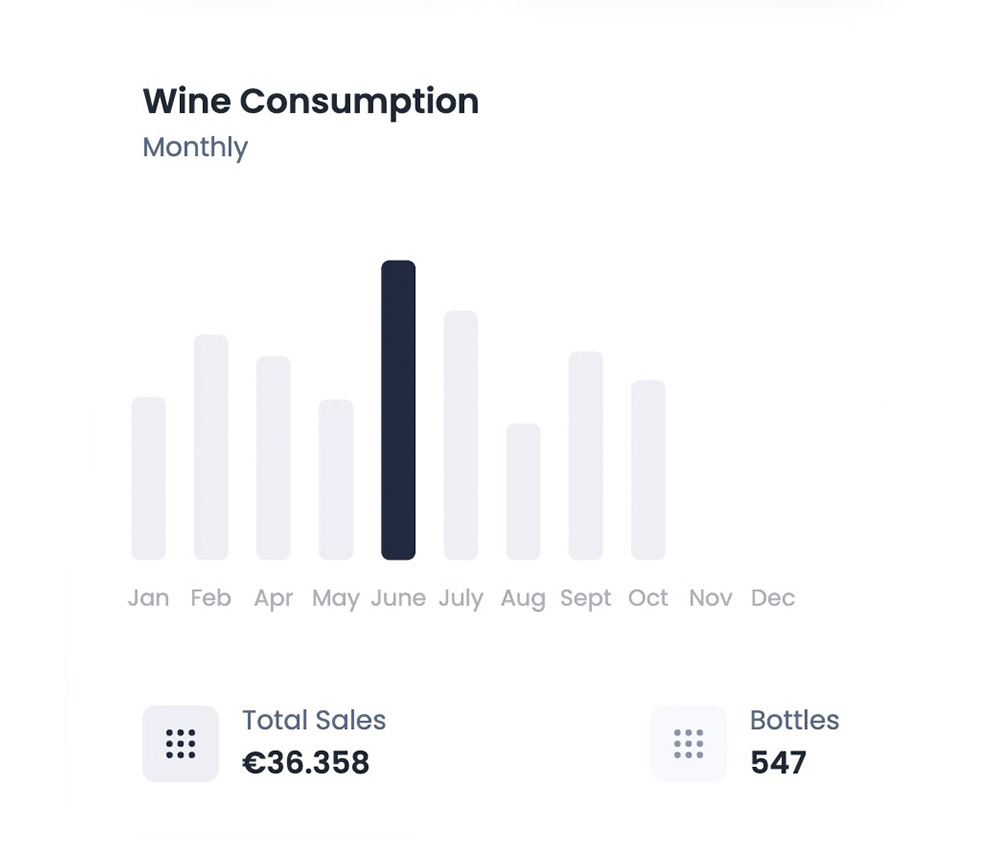
Portfolio valuation aggregated across lots, with depletion velocity and category breakdown
What's inside
Valuation built into the inventory record
Every lot carries its own valuation context. Portfolio-level figures are the sum of those records, always current.
Three valuation semantics
Track purchase-based, selling-based, and market-based value in the same record. See the gap between what you paid and what the market says it is worth.
Valuation history
Nightly snapshots capture value at a point in time, enabling trend queries without recalculating from scratch. See how the portfolio has changed over weeks and months.
Depletion velocity
Identify which wines are moving quickly and which are sitting. Velocity data informs pricing, promotion, and rotation decisions.
Gap and concentration analysis
Surface overexposure in one region or style, or identify gaps in the collection that strategic buying could fill.
Category and regional breakdown
Slice the portfolio by region, producer, vintage, or price tier to see how capital is allocated across the programme.
Slow-mover identification
Flag wines that have been in stock beyond a target holding period. Supports rotation decisions before stock becomes a problem.
How it works
From lot record to portfolio view
Purchase cost attaches to the lot
When a lot is received, the unit cost, supplier, and date are part of the record. Valuation starts from real purchase data, not estimates.
Selling price is set by the pricing engine
The rules-based pricing engine calculates the selling price from markup policies. The gap between cost and selling price is always visible in the same record.
Market reference adds context
Where market-value data is available, it can be attached to the wine record to compare against what the programme paid and what it charges.
Aggregation happens automatically
Portfolio-level valuation is the sum of lot-level records. It updates as lots are acquired, depleted, or adjusted, without a manual appraisal cycle.
For serious collectors
A private cellar managed like a portfolio
For collectors tracking investment-grade wines, the same valuation layer applies. Lot records carry provenance, purchase cost, and drinking-window context. Valuation rolls up across multiple storage locations so the full picture is always accessible without a separate tool.
- Purchase cost and market value per lot, not per wine title
- Multi-location storage rolled into one valuation view
- Drinking-window tracking alongside valuation
- Full movement history for provenance and insurance purposes
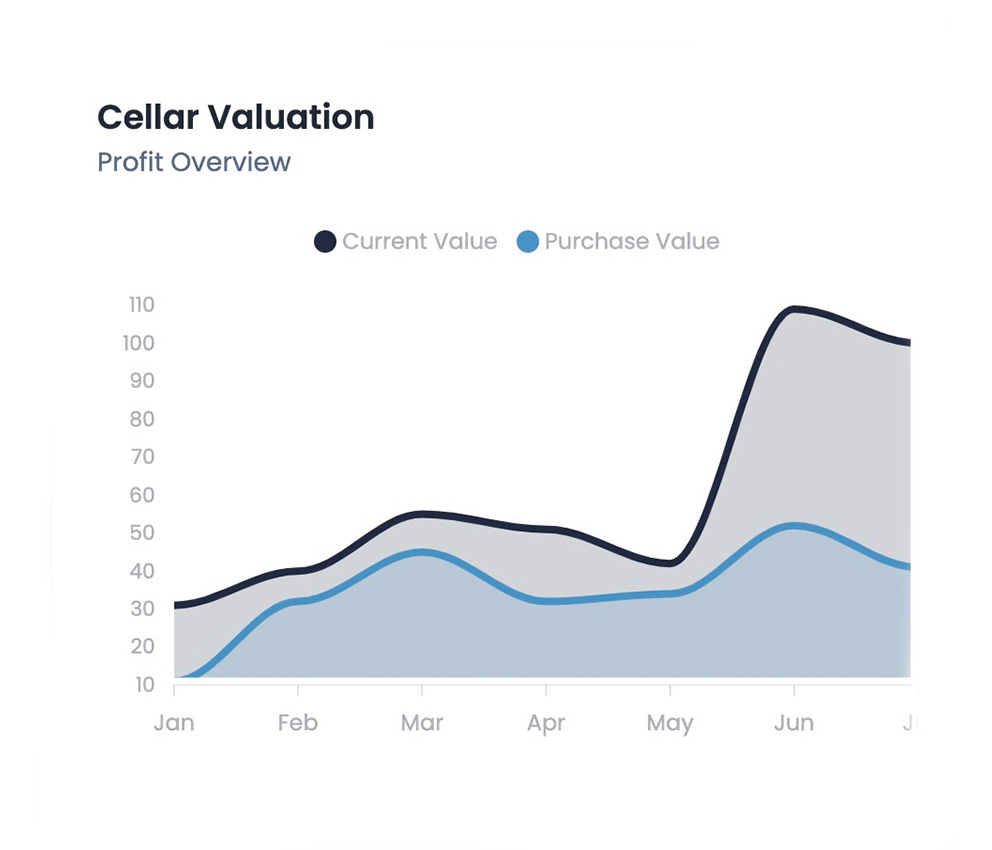
Lot-level valuation across multiple storage locations with drinking-window context
What it changes
Operational outcomes
Industry-typical figures. Actual results depend on the program.
Outcomes & Metrics
| Outcome | Before | With Vinius |
|---|---|---|
| Valuation visibility | Annual appraisals or manual spreadsheet calculation | Continuously updated as lots are acquired and depleted |
| Slow-mover identification | Noticed at year-end when overstock is already a problem | Flagged by velocity data throughout the year |
| Buying decisions | Reactive, based on supplier availability and gut feel | Informed by gap analysis and current portfolio concentration |
| Cost basis visibility | Buried in invoices and spreadsheets | Attached to each lot record from the date of purchase |
Valuation visibility
- Before
- Annual appraisals or manual spreadsheet calculation
- With Vinius
- Continuously updated as lots are acquired and depleted
Slow-mover identification
- Before
- Noticed at year-end when overstock is already a problem
- With Vinius
- Flagged by velocity data throughout the year
Buying decisions
- Before
- Reactive, based on supplier availability and gut feel
- With Vinius
- Informed by gap analysis and current portfolio concentration
Cost basis visibility
- Before
- Buried in invoices and spreadsheets
- With Vinius
- Attached to each lot record from the date of purchase
Know what your collection is worth.
Track purchase cost, selling price, and market value across every lot. Request access, accepted by invitation.